

Somnee Smart Sleep Headband Claims Evaluated: Does It Work? Wearable Tech for Restorative Rest Support
Somnee's neurostimulation technology, tACS research references, EEG sleep tracking capabilities, personalization process, membership structure, and general wellness positioning — outlined for consumers exploring non-invasive, drug-free alternatives to melatonin and sleeping pills in 2026
Berkeley, CA, April 16, 2026 (GLOBE NEWSWIRE) -- This content contains affiliate links. If a purchase is made through these links, a commission may be earned at no additional cost to the buyer. This is an informational overview and does not constitute medical, health, or sleep therapy advice. All product details described below are stated as presented within official Somnee materials and should be verified directly on the official website before any purchasing decision.
The following overview is to further interpret how the Somnee Smart Sleep Headband is described by Somnee, including its underlying neurostimulation approach, referenced research, and general wellness positioning. This informational release is intended to help you understand how the technology is presented and what you may wish to review directly through official sources.
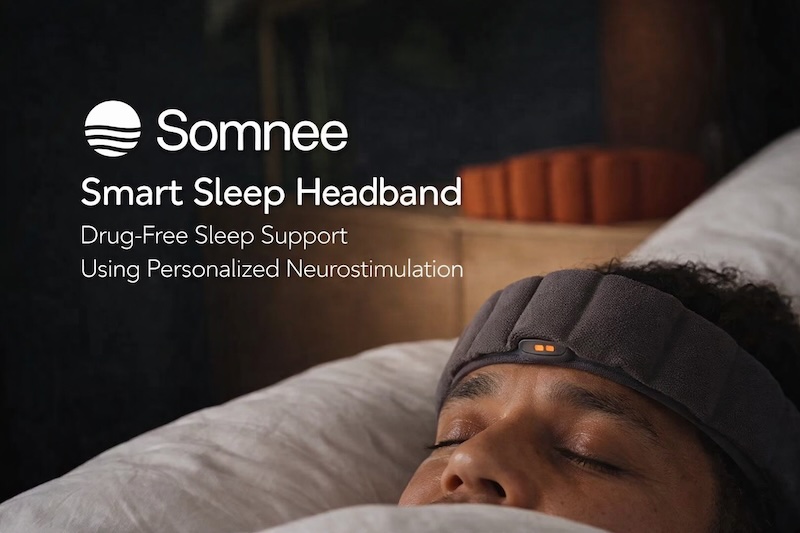
If you've been looking into wearable sleep technology, neurostimulation for sleep, or drug-free alternatives to sleeping pills, you've likely come across Somnee. The device appears across discussions related to non-invasive sleep support and brain-based sleep optimization — especially among adults who've tried melatonin, white noise machines, and other common methods without finding the deep, restorative rest they're looking for.
The Somnee Smart Sleep Headband was developed by StimScience Inc. out of Berkeley, California. The founding team includes four UC Berkeley neuroscientists: Dr. Matthew Walker, author of the New York Times bestseller Why We Sleep; Dr. Robert Knight, an internationally recognized expert in cortical function; Dr. Ram Gurumoorthy, Chief Science and Technology Officer; and Dr. Rich Ivry, a world-renowned expert on non-invasive brain stimulation. Somnee is positioned as a drug-free, non-invasive wearable that uses personalized transcranial alternating current stimulation (tACS) to support sleep onset, continuity, and overall sleep quality.
Here's what the official materials outline — and what's worth knowing before you decide whether to explore further.
Individual results vary. Sleep concerns should be discussed with a qualified healthcare provider. This device is not intended to diagnose, treat, cure, or prevent any disease or medical condition.
What the Somnee Smart Sleep Headband Is
Somnee is a wearable sleep device manufactured by StimScience Inc., located at 2115 Milvia Street, Suite 400, Berkeley, CA 94704. The headband delivers 15 minutes of personalized neurostimulation before bed using transcranial alternating current stimulation (tACS) combined with clinical-grade EEG+ sensors that monitor and map your brain activity.
The Somnee website describes the device as more than a sleep tracker. It uses proprietary Somnee SmartSleep AI to create a personalized stimulation program that adapts over time. The system maps your unique brain rhythms during the first seven sessions, personalizes the neurostimulation program through sessions eight to twenty-one, and then dynamically adapts the stimulation for what Somnee calls lifetime learning after session twenty-two.
Additional features outlined on the official website include built-in bone conduction speakers that deliver meditative neural soundscapes curated by Dr. Matthew Walker, a DriftBack session for middle-of-the-night wake-ups that launches phone-free with a button press, Daytime Sleep Mode for shift workers and travelers, and overnight sleep tracking described as collecting 40 times more data than leading wrist and ring wearables.
The headband features soft, breathable fabric designed for all-night comfort regardless of sleeping position. It uses medical-grade hydrogel electrodes that are replaced regularly through the required membership.
How Somnee Describes Its Sleep Support Technology
The question of whether Somnee "works" depends on how the device's intended role as a general wellness device is defined within its own materials. Somnee is positioned as a non-invasive sleep-support technology designed to assist with sleep onset, continuity, and overall sleep quality through personalized neurostimulation.
The central technology is transcranial alternating current stimulation (tACS) — a form of non-invasive brain stimulation that delivers gentle electrical currents through electrodes placed on the scalp. The goal, as Somnee describes it, is to nudge your brain's electrical activity into patterns more conducive to sleep.
tACS itself is a well-established area of neuroscience research. A safety meta-review of transcranial electrical stimulation studies, examining data across more than 8,000 participants and 18,000 sessions, found zero serious adverse effects associated with the technology. Multiple published studies from UC Berkeley researchers — several of whom are Somnee co-founders — have examined the relationship between brain wave synchronization and sleep quality.
Official Somnee materials reference a 2023 peer-reviewed study published in Frontiers in Human Neuroscience (Ayanampudi, Kumar, Krishnan, Walker, Ivry, Knight, and Gurumoorthy) as well as a 2025 white paper (Ayanampudi, Krishnan, and Gurumoorthy, StimScience Inc., doi: 10.1101/2025.10.09.25335041). Within these referenced materials, personalized tACS is described as helping participants fall asleep approximately 50% faster, reduce nighttime wake-ups by 33%, and increase total sleep time by nearly 30 minutes on average.
These findings are referenced within Somnee's published materials and are presented within the context of controlled research settings. The studies involved specific participant populations and protocols — an important distinction for anyone considering how referenced study outcomes may relate to their own individual experience with the consumer device.
Somnee's official materials also include comparative references involving melatonin, prescription sleep aids, and behavioral sleep approaches. These comparisons are attributed to company-referenced research materials and are presented as part of the product's overall positioning.
If you're researching terms like "does Somnee work," "Somnee sleep results," or "Somnee neurostimulation effectiveness," the published research behind the technology originates from the company's UC Berkeley founding team and is available for direct review through the cited publications. You can also explore the full Somnee product details here.
Somnee's General Wellness Positioning
This is an area worth understanding clearly. Somnee is positioned as a consumer wellness sleep device. Within its published terms of use, StimScience states that the service is intended for "general wellness" and is "not to be used for the diagnosis, cure, prevention, or treatment of any disease or medical condition."
The terms further specify that certain individuals should not use the device, including those who are pregnant, who have active implanted medical devices such as pacemakers, who have skull defects or implants, or who have epilepsy or a history of seizures.
For broader context, the category of cranial electrical stimulation devices has been subject to FDA classification at various levels depending on intended use and marketing claims. Whether any specific device falls under a particular regulatory classification depends on factors that are beyond the scope of this informational overview.
If you have existing medical conditions or take medications that affect sleep, reviewing the device's current positioning directly with Somnee or through FDA resources before purchasing is a practical step.
The Three-Phase Personalization Process
One thing that sets Somnee apart from most sleep products is that it isn't designed to work the same way on night one as it does on night twenty-one. The Somnee website outlines a three-phase personalization journey:
Phase 1 — Mapping (Sessions 1-7): Somnee's EEG+ sensors and proprietary AI begin learning your unique brain rhythms and sleep-promoting neuronal patterns, creating what Somnee calls your "brainprint."
Phase 2 — Personalization (Sessions 8-21): The system builds and refines a personalized neurostimulation program using pre- and post-session EEG snapshots to optimize stimulation parameters specifically for you.
Phase 3 — Adaptation (Session 22+): The AI sleep coach is described as fully personalized and prepared to dynamically evolve your stimulation as your sleep needs change over time — whether from stress, travel, seasonal shifts, or life changes.
Somnee's materials reference that a majority of users notice the most meaningful changes following the personalization phase, particularly after approximately 21 sessions. Worth knowing if you're setting expectations — the system is described as requiring consistent use over multiple sessions to reach its full potential.
The 45-day trial period is structured to accommodate this timeline, giving you enough runway to experience the full adaptive cycle before deciding.
A Typical Night with Somnee
The Somnee website outlines a typical usage flow as follows:
You put on the headband and start your session — either through the app or phone-free by pressing the headband button. The EEG+ sensors take a 30-second pre-session snapshot of your brain activity. Then you get 15 minutes of personalized tACS neurostimulation while you relax, read, or wind down however you normally would.
If you choose to wear the headband overnight, it tracks your sleep with what Somnee describes as lab-grade precision. In the morning, you set it on the charger, and within about 15 minutes your overnight sleep report is ready in the app — featuring insights into sleep onset, wake-ups, sleep stages, and depth.
If you wake up in the middle of the night, the DriftBack feature lets you press and hold the headband button for three seconds to launch a 10-minute mini stimulation session. No phone needed, no fumbling with apps at 3 AM.
For travelers and shift workers, Daytime Sleep Mode adjusts sessions to account for shifted circadian rhythms.
The companion Somnee app includes Dr. Matthew Walker's Sleep Journal — described as using the same evaluation methods he uses in his UC Berkeley sleep studies — along with a Sleep Hygiene Log that helps connect the dots between daily habits and nightly rest quality.
The Founding Team Behind the Technology
The Somnee founding team is rooted in academic neuroscience rather than consumer electronics. Published credentials include:
Dr. Matthew Walker, Co-Founder and Chief Sleep Scientist: Professor of Psychology and Neuroscience at UC Berkeley, founder of the UC Berkeley Center for Human Sleep Science, author of Why We Sleep.
Dr. Robert T. Knight, Co-Founder and Chief Medical Officer: Professor at UC Berkeley, two-time Jacob Javits Award recipient, Humboldt Prize in Neurobiology.
Dr. Ram Gurumoorthy, Co-Founder and Chief Science & Technology Officer: Ph.D. from UC Berkeley, previously led neuroscience at NeuroFocus Inc. (acquired by Nielsen).
Dr. Rich Ivry, Co-Founder and Sleep Scientist: Troland Prize recipient (National Academy of Sciences), Outstanding Investigator Award (NINDS).
Tim Rosa, Chief Executive Officer: Former CMO at Fitbit through its IPO and acquisition by Google.
Somnee describes the technology as refined over eight years in an advanced sleep lab near UC Berkeley, with more than 200,000 nights of data collected.
Pricing, Membership, and How to Purchase
The Somnee Smart Sleep Headband is available through a device-and-membership structure outlined on the official website. Somnee offers bundle configurations that include the headband, electrodes, charging accessories, and an initial membership period.
An active Somnee membership is required to use the headband. Membership covers regular replacements of medical-grade hydrogel electrodes, nightly cloud processing of brainwave data, sleep reports, access to Dr. Matthew Walker's Sleep Journal, and partnership perks.
Pricing, bundle configurations, and membership structure are described within Somnee's official purchasing materials. Because these details may change, you should review the current information directly through the official Somnee page before making any decision. Memberships auto-renew unless canceled at least 24 hours before the current period ends. Cancellation can be done through account settings or by contacting the support team.
Somnee also notes that the device may be HSA/FSA eligible for up to 30% back. Eligibility is determined through a post-checkout survey, and you should verify with your specific plan administrator since coverage varies.
Current pricing and availability can be confirmed by reviewing Somnee's current bundle options and pricing.
The 45-Day Trial and Refund Policy
Somnee's published refund policy outlines a 45-Day Sleep Well Guarantee. If the device doesn't work for you for any reason, you can return it for a full refund — and Somnee pays for return shipping.
The 45-day window starts on the day the headband leaves the warehouse. Devices are currently available for shipment exclusively to residents of the United States. Attempts to ship outside the United States through a third party void the guarantee.
A Somnee Membership purchased as part of a bundle is eligible for a refund if the request is made in conjunction with a headband refund request, provided both items fall within the 45-day guarantee window.
Complete refund terms should be reviewed directly on the official website before ordering.
Safety Considerations Worth Reviewing
The tACS technology used by Somnee has been studied for decades. A safety meta-review of transcranial electrical stimulation studies reported zero serious adverse effects across more than 8,000 participants and 18,000 sessions. The most commonly reported effects are mild and temporary — slight tingling during stimulation and occasional minor skin irritation at electrode contact sites.
Within Somnee's published terms of use, the following individuals should not use the device:
Individuals who are pregnant or possibly pregnant. Individuals who have an active implanted medical device such as a pacemaker, defibrillator, or other neurostimulator. Individuals who have a skull defect or any implant in the skull. Individuals who have epilepsy or a history of seizures.
The device should not be used over broken skin or in any way contrary to the provided instructions.
If you have specific health concerns or take medications that affect sleep, consulting your healthcare provider before using any neurostimulation device is worth doing before you order.
Consumer Questions About the Somnee Smart Sleep Headband
What is Somnee's general wellness positioning?
Within its published terms, Somnee describes the service as intended for general wellness — not for the diagnosis, cure, prevention, or treatment of any disease or medical condition. The broader category of cranial electrical stimulation devices has been subject to various levels of FDA classification depending on intended use. If you have specific medical conditions, consulting a qualified sleep specialist is the right move.
Does Somnee require a subscription?
Yes. An active Somnee membership is required to use the headband. Membership covers electrode replacements, cloud data processing, sleep reports, and additional features. Pricing and cancellation terms are detailed on the official website.
How long does the personalization take?
Somnee describes that some users may notice differences within the first few sessions, but the system reaches full personalization after approximately 21 sessions. Somnee's materials reference that a majority of users notice the most meaningful changes following this personalization period. Individual timelines depend on your baseline sleep quality, consistency of use, and individual brain physiology.
Can I use Somnee alongside other sleep approaches?
The Somnee website includes references to users who pair the device with other sleep support methods. If you currently use a CPAP machine, take prescription sleep medication, or follow any clinical treatment plan, consulting your healthcare provider before adding any new sleep technology to your routine is a practical step.
Is the 45-day trial enough time to evaluate?
The trial window is designed to accommodate the full personalization journey. With 21 sessions to reach full adaptation, the 45-day period gives you approximately 24 additional days to evaluate the device at its fully personalized level before the return window closes.
Is Somnee available outside the United States?
Somnee devices are currently available for shipment exclusively to residents of the United States.
What happens if I cancel my membership?
Cancellations take effect at the end of the current billing cycle. You can continue using the membership until the end of your current term. Prorated refunds are not provided for the current term.
Summary
The Somnee Smart Sleep Headband represents an approach to sleep support grounded in neuroscience research from UC Berkeley scientists. The device uses personalized transcranial alternating current stimulation combined with EEG-based brain mapping — a technology with published peer-reviewed research behind it and a strong safety profile across thousands of study participants.
The device requires consistent use over approximately three weeks to reach full personalization, an active membership subscription, and represents a meaningful investment. The 45-day trial period provides a window for you to experience the full adaptive cycle before committing.
If you've done your research and want to explore the full details, you can do so by viewing the current Somnee offer (official Somnee page).
Contact Information
For questions before or during the purchasing process, Somnee's published contact information includes:
Company: StimScience Inc. (Somnee)
Address: 2115 Milvia Street, Suite 400, Berkeley, CA 94704, USA
Email: support@somneesleep.com
See the current Somnee Smart Sleep Headband offer
Disclaimers
Content and Consumer Information Disclaimer: This is an informational overview and does not constitute medical, health, sleep therapy, or legal advice. All product details, technology descriptions, pricing, and policy terms described here are stated as presented within official Somnee materials and publicly available research publications. Readers are encouraged to verify all details directly through official Somnee sources and to consult a qualified healthcare professional before using any sleep technology device.
Device and Health Notice: The Somnee Smart Sleep Headband is positioned as a consumer wellness device intended for general wellness purposes. Within published terms, it is not to be used for the diagnosis, cure, prevention, or treatment of any disease or medical condition. Individual results vary based on numerous factors including age, baseline sleep health, consistency of use, lifestyle factors, existing health conditions, and individual neurophysiology. Sleep concerns should be discussed with a qualified healthcare provider.
Results, Pricing, and Product Variability: All pricing, membership terms, trial offers, and refund policies referenced here are based on information published on the official Somnee website at the time of writing (April 2026) and may change without notice. Verify current terms through the official website before completing any purchase.
FTC Affiliate Disclosure and Publisher Responsibility: This content contains affiliate links. If a product is purchased through these links, a commission may be earned at no additional cost to the buyer. This compensation does not influence the accuracy, neutrality, or integrity of the information presented. All descriptions are based on published research and officially available Somnee materials. The publisher is not responsible for typographical errors, manufacturer changes after publication, or individual consumer outcomes.
Research Attribution Notice: The clinical research cited here was conducted by members of the Somnee founding team and published by StimScience Inc. through peer-reviewed venues and company white papers. Consumers are encouraged to review the published studies directly and to consider the research context when evaluating product positioning.

Email: support@somneesleep.com

Legal Disclaimer:
EIN Presswire provides this news content "as is" without warranty of any kind. We do not accept any responsibility or liability for the accuracy, content, images, videos, licenses, completeness, legality, or reliability of the information contained in this article. If you have any complaints or copyright issues related to this article, kindly contact the author above.
