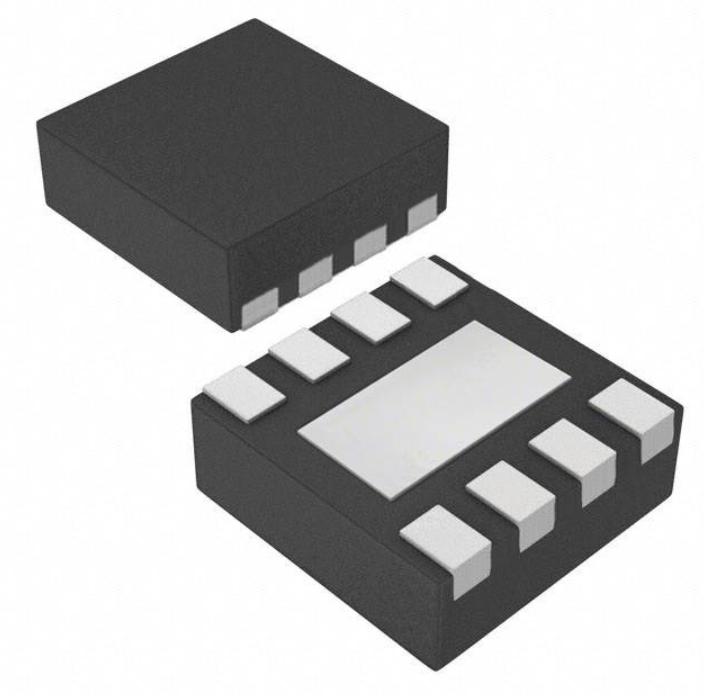
AI-Powered Medical Devices Need Stable Power: CONEVO Bridges the PMIC Supply Gap
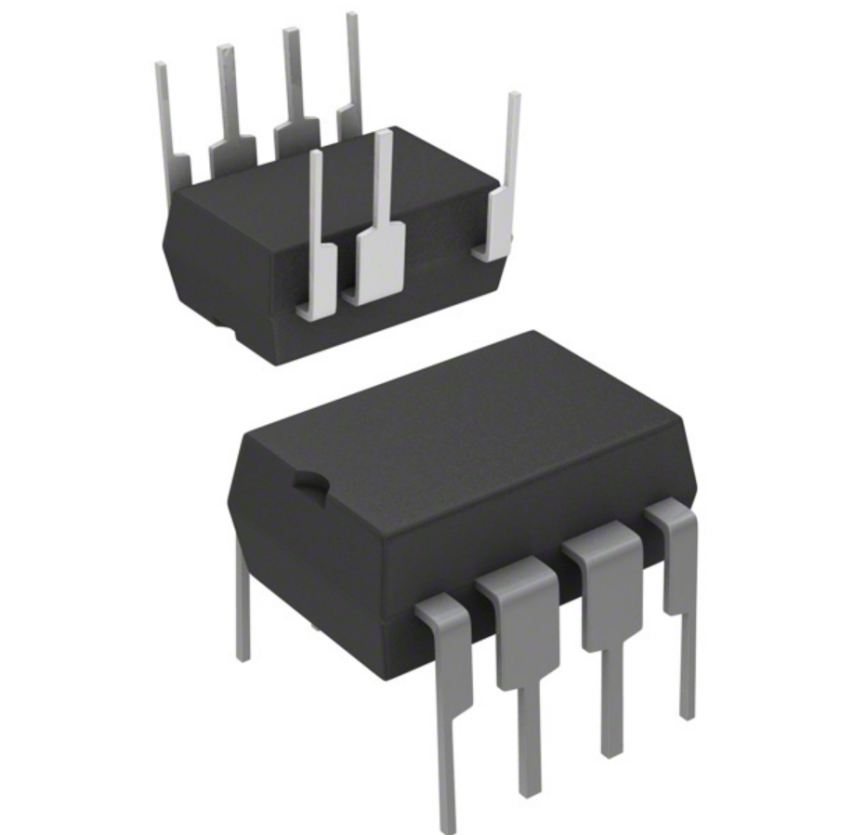
SHENZHEN, GUANGDONG, CHINA, October 15, 2026 /EINPresswire.com/ -- Medical electronics are shifting toward on-device intelligence. Handheld ultrasound probes now run image reconstruction locally, patient monitors screen ECG waveforms for arrhythmia in real time, and smart infusion pumps analyze dosing patterns at the bedside. These functions add processing load, and processing load eventually becomes a power problem. Portable monitors, point-of-care ultrasound units, and infusion pumps increasingly depend on compact power management integrated circuits (PMICs) that combine several voltage regulators, a battery charger, and power sequencing logic in one package. Integration saves board space and improves efficiency, but it also concentrates risk: a single part number can hold an entire board hostage.
Medical products carry multi-year development cycles, regulatory filings, and clinical validation, so a redesign is rarely a quick fix. When a factory extends lead times or hits a production bottleneck, a steady PMIC supply becomes the difference between a running line and a stalled one. CONEVO, a Hong Kong-based distributor of in-stock IC components, works on exactly this gap — keeping traceable active parts on hand and answering quickly when a design team or a buyer needs a device sooner than the original factory can ship it.
Step 1: Selection Parameters for Medical Power ICs
Power architectures in medical equipment face requirements that consumer designs usually do not. Thermal behavior, electromagnetic interference, acoustic noise from inductors and ceramic capacitors, and quiescent current all matter. In a handheld ultrasound unit or a transport infusion pump, every microamp of idle current shortens the time a device can operate away from mains power.
A medical-grade PMIC typically feeds several sub-systems at once. High-resolution ADCs in the signal chain need clean rails with low ripple and controlled switching noise. Edge-AI processors and wireless modules behave differently — they draw current in bursts, so transient response and rail recovery during state changes carry real weight. Evaluating a candidate part usually means looking at buck regulators, LDOs, boost stages, and integrated charger management together rather than one block at a time.
Low output noise and thermal efficiency also interact with mechanical design, since sealed, fluid-resistant enclosures give heat few places to go. Finding a workable substitute is a matching exercise: pinout, thermal pad geometry, reference tolerance, start-up sequencing, and protection thresholds all need to line up. Conevo Electronics reviews these boundary conditions with engineering teams so candidate parts are checked against actual noise and sequencing needs before boards are built.
Step 2: Real Inventory Across Multiple Brands, Supported by Global Sourcing
A familiar frustration in medical manufacturing is finding a datasheet easily and finding the part itself nowhere. CONEVO addresses this by holding inventory across widely used power management families from manufacturers such as Texas Instruments, Monolithic Power Systems (MPS), and ON Semiconductor, searchable by exact part number or function.
Stock records correspond to physical goods rather than indicative listings. Each entry carries the manufacturer, lot code, date code, packaging format, and available quantity, which allows a buyer to judge suitability before requesting a quote. Category coverage spans buck-boost regulators, multi-channel PMICs, battery monitoring ICs, and precision references, so functional equivalents across brands can be compared side by side when a primary lead time turns unworkable.
When a specific device is not on the shelf, sourcing moves outward through established channels in Asia, Europe, and North America, with quantity, price, and delivery confirmed before any commitment. Continuity is handled the same way: repeat orders, scheduled releases against a production plan, and buffer stock held for programs that must run for several years without a design change.
Step 3: Fast Response on Alternatives and Cross-Reference Checks
When a supply line closes for months, substitution or a small circuit revision is often the only practical route. For products like ventilator power modules or mobile telemetry boards, waiting for a new factory allocation window is usually not an option. CONEVO's in-house engineering team reviews drop-in replacements and cross-reference candidates, generally returning findings within 72 hours of receiving the schematic and requirements.
One recent case involved a hospital ventilator control board. The original power management chip went into allocation with no visible recovery date, and the line was close to stopping. Engineers at Conevo Electronics went through the schematic, located a functionally comparable PMIC in stock from another established manufacturer, and prepared pin-mapping documentation alongside the comparison. Two passive values on the feedback loop were adjusted, and sample units were shipped for bench testing. With pin compatibility, input voltage range, and switching frequency checked in advance, the customer validated the alternative on prototype boards and kept shipment dates intact. The point of this process is modest but useful: it turns an urgent substitution from guesswork into a documented check.
Step 4: Quality Checks That Reduce Counterfeit Risk
Medical manufacturing operates under regulatory frameworks where a failed component creates consequences well beyond scrap cost. Open-market sourcing carries real exposure to remarked, refurbished, or moisture-damaged parts, so incoming material is inspected in stages before it is released to any order.
Inspection starts with visual and optical microscopy covering package markings, pin alignment, surface texture, and lead finish. Further methods are applied as the part and quantity warrant:
X-ray inspection: checks wire bonding, die size consistency, and lead frame structure without opening the package.
Decapsulation and die analysis: applied to sample units, exposing the silicon to confirm manufacturer logos, die layout, and revision markings under high-magnification optics.
Electrical and programming verification: parameter and continuity testing, with optional programming, tape-and-reel repackaging, and baking to the applicable moisture sensitivity level.
Test reports and photographs accompany shipments where documentation is required for incoming inspection or audit files.
Keeping Medical Production Lines Supplied
Component sourcing for medical hardware comes down to three practical questions: does the stock exist, can the part be confirmed as suitable, and will the material hold up under inspection. By combining verified inventory, global sourcing reach, and engineering cross-reference support, CONEVO gives medical device manufacturers a workable path through sudden shortages rather than a longer wait.
To check availability or request cross-reference support for medical-grade power components, submit a complete Bill of Materials (BOM) inquiry through the official website at https://www.conevoelec.com/
Medical products carry multi-year development cycles, regulatory filings, and clinical validation, so a redesign is rarely a quick fix. When a factory extends lead times or hits a production bottleneck, a steady PMIC supply becomes the difference between a running line and a stalled one. CONEVO, a Hong Kong-based distributor of in-stock IC components, works on exactly this gap — keeping traceable active parts on hand and answering quickly when a design team or a buyer needs a device sooner than the original factory can ship it.
Step 1: Selection Parameters for Medical Power ICs
Power architectures in medical equipment face requirements that consumer designs usually do not. Thermal behavior, electromagnetic interference, acoustic noise from inductors and ceramic capacitors, and quiescent current all matter. In a handheld ultrasound unit or a transport infusion pump, every microamp of idle current shortens the time a device can operate away from mains power.
A medical-grade PMIC typically feeds several sub-systems at once. High-resolution ADCs in the signal chain need clean rails with low ripple and controlled switching noise. Edge-AI processors and wireless modules behave differently — they draw current in bursts, so transient response and rail recovery during state changes carry real weight. Evaluating a candidate part usually means looking at buck regulators, LDOs, boost stages, and integrated charger management together rather than one block at a time.
Low output noise and thermal efficiency also interact with mechanical design, since sealed, fluid-resistant enclosures give heat few places to go. Finding a workable substitute is a matching exercise: pinout, thermal pad geometry, reference tolerance, start-up sequencing, and protection thresholds all need to line up. Conevo Electronics reviews these boundary conditions with engineering teams so candidate parts are checked against actual noise and sequencing needs before boards are built.
Step 2: Real Inventory Across Multiple Brands, Supported by Global Sourcing
A familiar frustration in medical manufacturing is finding a datasheet easily and finding the part itself nowhere. CONEVO addresses this by holding inventory across widely used power management families from manufacturers such as Texas Instruments, Monolithic Power Systems (MPS), and ON Semiconductor, searchable by exact part number or function.
Stock records correspond to physical goods rather than indicative listings. Each entry carries the manufacturer, lot code, date code, packaging format, and available quantity, which allows a buyer to judge suitability before requesting a quote. Category coverage spans buck-boost regulators, multi-channel PMICs, battery monitoring ICs, and precision references, so functional equivalents across brands can be compared side by side when a primary lead time turns unworkable.
When a specific device is not on the shelf, sourcing moves outward through established channels in Asia, Europe, and North America, with quantity, price, and delivery confirmed before any commitment. Continuity is handled the same way: repeat orders, scheduled releases against a production plan, and buffer stock held for programs that must run for several years without a design change.
Step 3: Fast Response on Alternatives and Cross-Reference Checks
When a supply line closes for months, substitution or a small circuit revision is often the only practical route. For products like ventilator power modules or mobile telemetry boards, waiting for a new factory allocation window is usually not an option. CONEVO's in-house engineering team reviews drop-in replacements and cross-reference candidates, generally returning findings within 72 hours of receiving the schematic and requirements.
One recent case involved a hospital ventilator control board. The original power management chip went into allocation with no visible recovery date, and the line was close to stopping. Engineers at Conevo Electronics went through the schematic, located a functionally comparable PMIC in stock from another established manufacturer, and prepared pin-mapping documentation alongside the comparison. Two passive values on the feedback loop were adjusted, and sample units were shipped for bench testing. With pin compatibility, input voltage range, and switching frequency checked in advance, the customer validated the alternative on prototype boards and kept shipment dates intact. The point of this process is modest but useful: it turns an urgent substitution from guesswork into a documented check.
Step 4: Quality Checks That Reduce Counterfeit Risk
Medical manufacturing operates under regulatory frameworks where a failed component creates consequences well beyond scrap cost. Open-market sourcing carries real exposure to remarked, refurbished, or moisture-damaged parts, so incoming material is inspected in stages before it is released to any order.
Inspection starts with visual and optical microscopy covering package markings, pin alignment, surface texture, and lead finish. Further methods are applied as the part and quantity warrant:
X-ray inspection: checks wire bonding, die size consistency, and lead frame structure without opening the package.
Decapsulation and die analysis: applied to sample units, exposing the silicon to confirm manufacturer logos, die layout, and revision markings under high-magnification optics.
Electrical and programming verification: parameter and continuity testing, with optional programming, tape-and-reel repackaging, and baking to the applicable moisture sensitivity level.
Test reports and photographs accompany shipments where documentation is required for incoming inspection or audit files.
Keeping Medical Production Lines Supplied
Component sourcing for medical hardware comes down to three practical questions: does the stock exist, can the part be confirmed as suitable, and will the material hold up under inspection. By combining verified inventory, global sourcing reach, and engineering cross-reference support, CONEVO gives medical device manufacturers a workable path through sudden shortages rather than a longer wait.
To check availability or request cross-reference support for medical-grade power components, submit a complete Bill of Materials (BOM) inquiry through the official website at https://www.conevoelec.com/
CONEVO
CONEVO
Visit us on social media:
Instagram
Facebook
YouTube
Legal Disclaimer:
EIN Presswire provides this news content "as is" without warranty of any kind. We do not accept any responsibility or liability for the accuracy, content, images, videos, licenses, completeness, legality, or reliability of the information contained in this article. If you have any complaints or copyright issues related to this article, kindly contact the author above.